The Plaza de Toros is one of Pamplona’s best-known landmarks. Every morning during San Fermín, the Running of the Bulls ends on its sand, and for the rest of the year the building is part of the city’s history and everyday life. With 19,529 seats, the Pamplona bullring is the second largest in Spain, after Las Ventas in Madrid.
In this guide we explain its history, the role it plays in the fiesta and how to visit it, whether or not you are interested in bullfighting.
A short history of the Pamplona bullring
The bullring opened on 7 July 1922, on the feast of San Fermín itself. It was designed by the architect Francisco Urcola and stands at the edge of the old town, a few minutes’ walk from Plaza del Castillo.
As the fiesta became internationally famous, the original building was too small for the crowds. In 1967 it was enlarged under the direction of the architect Rafael Moneo, which gave it its current capacity. Another renovation in 2005 improved accessibility, including a lift.
The bullring belongs to the Casa de Misericordia, a local charity that runs a care home for older people and organises the bullfights of San Fermín.
The finish line of the Running of the Bulls
From 7 to 14 July, the encierro starts at 8:00 every morning in the Santo Domingo slope. Runners and bulls cover about 850 metres through the streets of the old town, including the famous Estafeta street, and enter the bullring through a narrow passage under the stands. The run usually lasts only two or three minutes.
Many visitors prefer to watch the arrival from inside the bullring, where you can see the runners pour into the arena. After the bulls are taken to the pens, young cows with padded horns are released into the ring and the runners show off their skills. Tickets for the morning are sold separately from the afternoon bullfights. Our San Fermín festival guide explains the best ways to watch the run.
The afternoon bullfights and the sunny side
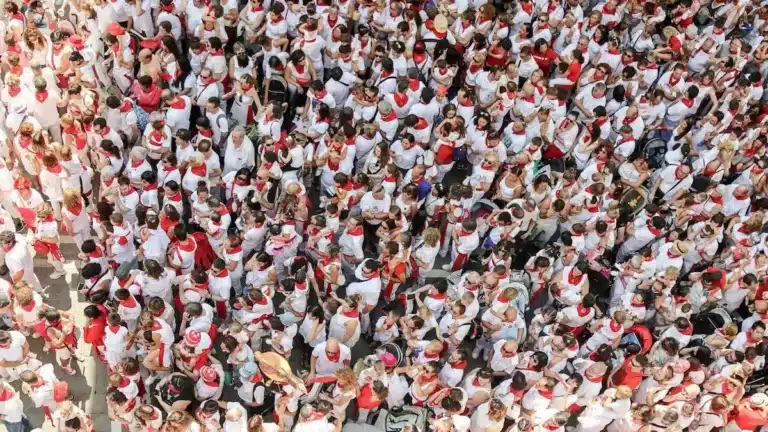
Every afternoon of the fiesta the bullring hosts the bullfights of the Feria del Toro. The atmosphere is as famous as the bullfights themselves, especially on the sunny side of the stands, where the peñas (local fiesta clubs) play music, sing and share food and drink throughout the afternoon.
Bullfighting is a controversial tradition, and many visitors to Pamplona choose not to attend a bullfight. You can still enjoy the building, its history and the Running of the Bulls atmosphere without doing so.
Visiting the bullring outside San Fermín
Outside the fiesta, the bullring can be visited as a museum, so you can see the arena and stands up close and learn about its history and the encierro. Timetables, prices and what each visit includes may change, so check the official information from the Pamplona City Council before you go.
The bullring also hosts concerts and other sporting and cultural events during the year.
Just outside, on Paseo Hemingway, a monument remembers Ernest Hemingway. His novel The Sun Also Rises (1926) made San Fermín famous around the world, and he is still one of the most photographed names in the city.
How to get there and what to see nearby
From our apartments in the Pío XII area, the bullring is a pleasant walk of about 20–25 minutes through the Ciudadela park and the old town, or a few minutes by taxi or city bus.
Once there, you are close to many of the city’s highlights:
- Plaza del Castillo, the main square, with its historic cafés.
- Estafeta street, the most famous stretch of the bull run, full of bars and shops.
- The city walls, with views over the Arga river and the mountains.
Plan the rest of your visit with our guide to what to see in Pamplona in a weekend and our selection of where to eat in Pamplona.
Where to stay
Our apartments in Pamplona have 1 to 4 bedrooms, a fully equipped kitchen and fibre Wi-Fi, in a quiet area next to the Clínica Universidad de Navarra. They are ideal for couples, families and groups who want space and the freedom to come and go. Check availability and book online.